

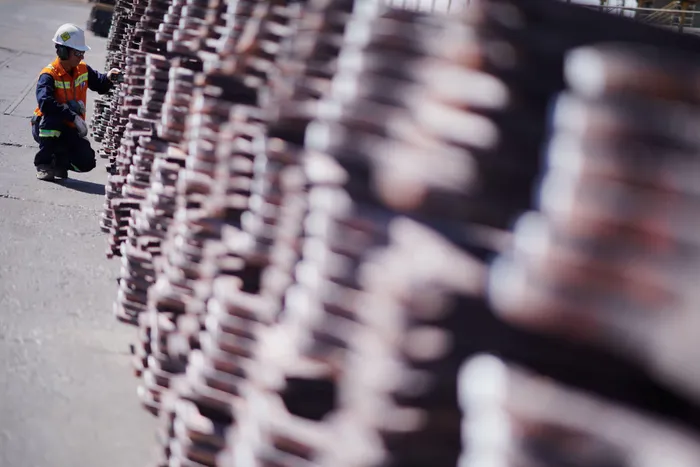
Analysts believe Rio Tinto’s interest in Glencore is largely driven by the Swiss-based group’s strong copper exposure, a commodity that has become central to the global energy transition and the expansion of artificial intelligence.
Image: Supplied
Tawanda Karombo
The proposed R3.4 trillion merger between mining giants Rio Tinto and Glencore could have significant knock-on effects for South Africa, which has increasingly lost its status as a domicile for major global mining companies.
Analysts believe Rio Tinto’s interest in Glencore is largely driven by the Swiss-based group’s strong copper exposure, a commodity that has become central to the global energy transition and the expansion of artificial intelligence.
However, the creation of what would be the world’s largest mining company would also have implications for South Africa, where Glencore maintains a sizeable operational and corporate footprint.
Andrew Bahlmann, M&A specialist and CEO at Deal Leaders International, said in an interview on Monday that possible strategic repositioning of the merged entity will be impactful for Glencore’s ferrochrome, vanadium and other interests.
“While the Glencore/Rio Tinto merger is focused on global assets, there are possible knock-on effects for South Africa,” said Bahlmann.
“Glencore is listed on the JSE and has operations in the country, including ferrochrome, vanadium and coal interests (and) any strategic repositioning - whether divestitures or capital reallocations - could influence local employment, investment flows and commodity markets.”
Other major international companies such as AngloGold Ashanti, BHP and Anglo American after its restructuring and tie up with Teck Resources have shifted domicile, divested or moved primary listing from South Africa.
Nonetheless, investors in Glencore and other numerous stakeholders given its footprint of operations in SA could also benefit from the merger. Glencore surged 10% on the JSE on Friday after the two companies confirmed that they were engaged in discussions to consummate the merger.
“South African stakeholders may be indirect beneficiaries rather than central drivers of the transaction, given the global strategic motivations centred on copper and portfolio optimisation,” added Bahlmann.
Rio Tinto has until 5 February to announce if it intends to make a firm offer or not although the date can also be extended by regulatory authorities.
Discussions between the two firms have persisted for a long time although the latest confirmation has provided impetus, with the allure of copper also weighing in, especially after the merger of Anglo American and Teck.
Copper has stirred up merger and acquisition activity in the global mining sector over the past few months with Anglo American also tying up together with Teck Resources after it rebuffed BHP’s offer.
Analysts said for the broader global mining sector, the magnitude of the Rio Tinto/Glencore merger will “accelerate further consolidation, particularly among companies seeking to scale up in high-growth metals or diversify” risk.
As M&A activity and deal making in the global mining sector blossoms, led by copper given its growing importance in the glonal renewable energy and Artificial Intelligence race, investors have to navigate regulation, labour, community and political risks to ensure that such transactions are structured effectively, and in compliance with host-country requirements.
Forecasts suggest that copper demand could rise by roughly 50% by 2040, while supply could lag, potentially creating structural tightness in the market. This has provided impetus to deal making activity across the mining sector, with major producers seeking to secure long-life copper assets through deals.
“Therefore, the renewed merger discussions between Glencore and Rio Tinto represent one of the most significant potential consolidations in the global mining industry in years. I see the potential tie-up as symptomatic of a new phase of consolidation driven by the global energy transition,” said an analyst.
According to Bahlman, a combined Rio Tinto-Glencore entity controlling 8–9 % of global mined copper production would establish a formidable platform to serve tightening markets.
Glencore made tax, royalty and duty payments amounting to $157 million to South Africa in 2024. Over the same period, Glencore suffered about $611m worth of impairments in its South African operations, significantly contributing to the company’s $1.6 billion in losses to equity holders.
The $157 million in payments to the South African government for 2024 were accounted for by $111.5m in income taxes, $45.3m in royalties.
BUSINESS REPORT