

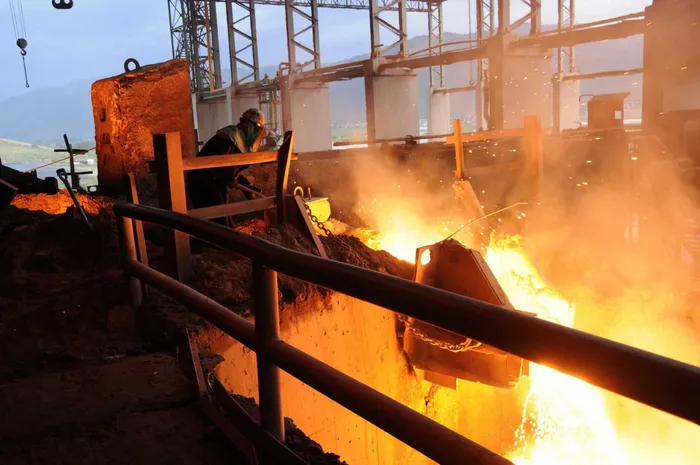
Numsa demands to the Presidency include the introduction of a chrome ore export quota, export rebates, and an export tax to discourage raw ore shipments.
Image: Supplied
Banele Ginindza
The Congress of South African Trade Unions (Cosatu) has welcomed the agreement between Eskom and major ferrochrome producers Samancor Chrome and the Glencore–Merafe Chrome Venture to halt planned retrenchments that threatened more than 7 000 jobs from December.
The federation, however, says the temporary reprieve must pave the way for a permanent, affordable electricity solution to safeguard the future of South Africa’s ferrochrome sector.
The memorandum of understanding (MOU) signed by Eskom, the producers and government establishes a joint multi-stakeholder task team to develop a long-term intervention to support industrial competitiveness without shifting additional costs onto other electricity users.
The parties aim to present a proposed solution within three months.
Cosatu parliamentary coordinator, Matthew Parks, said on Tuesday that the federation “warmly welcomes this job-saving agreement,” but emphasised that the companies must honour their commitment to suspend retrenchment processes.
"We cannot afford to see a single worker added to the already dangerously high unemployment rate of 42.4%," Parks said.
"We expect all parties to offer solutions and make compromises to ensure that the jobs of these workers are saved and the sustainability of this strategic industry as well as Eskom are ensured."
The development comes as the National Union of Metalworkers of South Africa (Numsa) intensifies pressure on government, calling for nationalisation of the smelter industry to prevent further job losses.
Numsa marched to the Presidency on Monday and to the Industrial Development Corporation on Tuesday, accusing government of failing to implement an industrial policy capable of protecting South Africa’s manufacturing sector.
In its petition, Numsa detailed widespread job losses across the industry:
The union’s demands to the Presidency include the introduction of a chrome ore export quota, export rebates, and an export tax to discourage raw ore shipments.
It also wants South Africa’s ferrochrome to be excluded from the EU’s Carbon Border Adjustment Mechanism and exempt from domestic carbon taxes.
"We demand that the Negotiated Pricing Agreement on electricity tariffs should apply to Green Energy Projects rather than the Eskom Megaflex tariffs during periods of no generation," Numsa said.
"Numsa continues to demand that the government cannot fail to give this sector a 62 cent electricity tariff when we have an abundance of coal which is our strategic mineral. Government must mandate Eskom to deliver an affordable electricity tariff to this sector with immediate effect."
According to the MOU, the National Energy Regulator of South Africa (Nersa) is currently considering an interim tariff adjustment application lodged by Eskom on behalf of the smelters.
The government is simultaneously developing a complementary pricing-support mechanism, expected within three months, to put the sector on a more competitive long-term electricity pricing path.
Once Nersa approves the interim tariff, the smelters have committed to suspend Section 189 retrenchment proceedings and bring around 40% of furnace capacity back online while the long-term solution is finalised.
Samancor and Glencore–Merafe currently operate under NPAs approved by Nersa in October 2023.
The six-year agreements, which came into force earlier this year under the Department of Mineral Resources and Energy’s 2020 Interim Long-Term Framework, provide energy-intensive industries with more globally competitive electricity tariffs to support production, safeguard jobs and maintain the country’s industrial base.
Earlier this year, deteriorating market conditions and escalating electricity costs prompted both smelters to invoke the hardship provisions of their NPAs.
Eskom subsequently applied for a temporary waiver of their take-or-pay obligations, which Nersa granted for a limited period.
While the relief temporarily stabilised operations, it underscored the need for a sustainable, long-term tariff solution to prevent the collapse of South Africa’s ferrochrome industry.
BUSINESS REPORT