Bold Mlambo judgment upholds spirit of our constitutional democracy
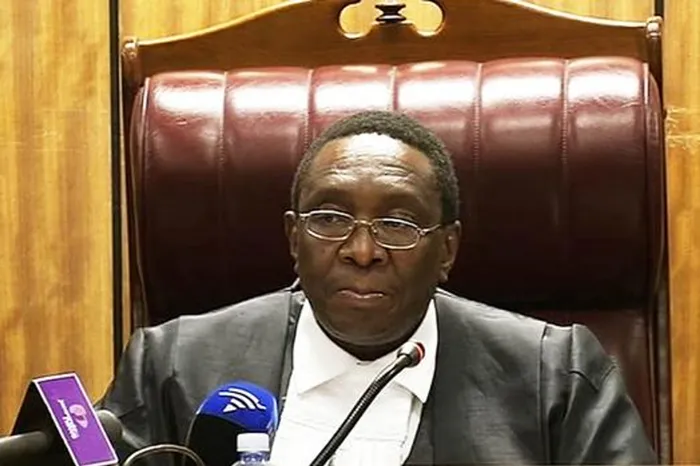
Judge President Dunstan Mlambo Photo: African News Agency/ANA Judge President Dunstan Mlambo Photo: African News Agency/ANA
In a notable judgment that is likely to have profound constitutional and political consequences, handed down by Judge President Dunstan Mlambo in the North Gauteng High Court in Pretoria, the full bench unanimously found that the public protector does indeed have the powers to instruct the president how to exercise executive authority in relation to the commission of inquiry into state capture, concerning which the president had brought an application to review and set aside erstwhile public protector Thuli Madonsela’s “State of Capture” report.
The president had cogently objected to the instruction that the commission be led by a judge selected by the Chief Justice, and not chosen by the president himself.
Judge Mlambo stated that initially the president had sought that the matter be referred back to the public protector for further investigation because it was argued that the public protector could not outsource any function. However, this line of argument was abandoned.
In his scathing judgment, Judge Mlambo ordered Zuma to personally pay the costs of the abortive attempt to stop the release of the “State of Capture” report and given 30 days to institute the commission of inquiry.
In his ruling, Judge Mlambo declared that it would be wrong for taxpayers to foot the bill for the president’s conduct. In this regard the judge president did not mince his words, stating that the president persisted with litigation and forced the intervening parties to incur costs when this should have been avoided, as well as delaying the release of the report. In so doing the president clearly acted in flagrant disregard of the constitutional duties ofthe public protector.
In addition, Judge Mlambo criticised the president for persisting with his application even after it had become clear that it had no merit. The judge president’s criticism was scathing in his comment that the president’s persistence with litigation in the face of finality of the investigation and report, as well as his own unequivocal statement regarding finality, clearly amounts to objectionable conduct by a litigant and amounts to a clear abuse of the judicial process.
The judicial inquiry, recommended a year ago, dealt with whether the president’s business friends, the controversial Gupta triumvirate, had exercised undue influence on the president in relation to the appointment of ministers of state.
Most commentators are likely to laud Judge Mlambo’s judgment as a bold and courageous one, upholding both the letter and spirit of the constitution, a few are likely to condemn it as an example of a jurisprudentially dangerous manifestation of “judicial overreach”.
Our constitution provides for a supreme constitution and an entrenched Bill of Rights. This gives rise to what is known as judicial review and the testing right of the courts.
This means the final word on the interpretation and application of the constitution is vested in the judiciary and not the legislature or executive.
The theory and practice of judicial review has its genesis in the US. Judicial review and the testing right of the courts are inherently problematic and controversial in whatever country they find application.
The reason for such controversy is that the testing right of the courts gives rise to a dilemma, in terms of which the courts are able to invalidate legislation and executive conduct of a democratic legislature and of democratically elected officials. This by its nature is contentious from a political point of view.
In our traumatic political and constitutional history, whenever the courts exercised such a testing right the counter-majoritarian dilemma became an issue, such as in the Transvaal Republic in case of Brown v Leyds.
In this case, after Chief Justice Kotze had exercised the testing right, he was ingloriously dismissed by President Kruger, who declared that such a right was “a principle invented by the devil”.
When in the 1950 the erstwhile Appellate Division of the SA Supreme Court exercised the testing right in the famous “coloured voters cases”, great political controversy occurred.
In contemporary South Africa, the exercise of judicial review and testing right of the courts is very politically controversial and has given rise to the criticism of the judiciary by ANC leaders as exceeding its powers, called “judicial overreach”.
As indicated above, Judge Mlambo’s judgment is likely to have significant political and constitutional consequences. It leaves the president little or no room for manoeuvre and it is submitted he should comply, since although he can seek leave to appeal from the Supreme Court of Appeal, this is unlikely to succeed, as the consensus of opinion is that the judgment is jurisprudentially very sound.
It also now requires the Chief Justice to act in appointing a chairperson for the commission of inquiry. Disregarding the judgment would create a constitutional and political crisis of the first order.
What also emerges is that the credibility, position and reputation of President Zuma is increasingly untenable and he has become a liability for the ANC.
What is also however clear from this and other recent judgments is that the judiciary is boldly and fearlessly upholding the letter and spirit of the constitution. In so doing our constitutional democracy is being protected and promoted.
* Devenish is Emeritus Professor at UKZN and one of the scholars who assisted in drafting the interim constitution in 1993.