

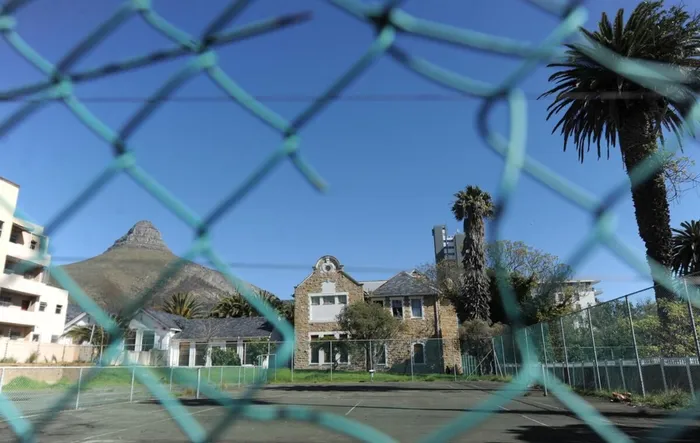
In 2016, this property in Sea Point was sold by the Western Cape Government to the Phyllis Jowell Jewish Day School for R135 million. This sale has now been overturned by the Constitutional Court.
Image: Armand Hough / Independent Media
The Constitutional Court's recent ruling that the sale of the Tafelberg site in Sea Point was unlawful, ordering the City of Cape Town and the Western Cape Government to report on how they plan to meet their constitutional obligations around affordable housing in and around the CBD.
The ruling lands as new data shows the scale of the affordability gap facing the region. The Western Cape's average property price in the first quarter of 2026 was R3,357,917, according to Cape Town property strategist Nathan Scott, 72% above the national average of R1,951,230. To qualify for a bond on a standard R2.5 million three-bedroom home in Bellville, Durbanville or the Winelands corridor, Scott said, a household needs a net income of roughly R55,000 to R60,000 a month.
Gauteng now accounts for 50.8% of all property transfers nationally, Scott said.
Finella Botes, high-value property consultant at Seeff Atlantic Seaboard, said the Tafelberg judgment reaches beyond the single property. "Well-located land has become one of Cape Town's most valuable and most debated assets," she said, adding she does not expect it to shift the luxury market immediately but predicts it will bring closer scrutiny to how strategically located land is developed in future.
The ruling follows growing criticism of the city's housing pipeline. In a LinkedIn post this week, Julia Finnis-Bedford, founder of developer Amazing Spaces, said Cape Town is producing high-end stock at pace while the middle market goes underserved. Finnis-Bedford, who develops luxury homes in Constantia aimed at semigrants and foreign buyers, said high construction costs, expensive land and slow planning approvals push developers toward the top end, where margins can absorb delays. "That risk pushes developers toward the higher end, where margins absorb delays," she said. "It's not always a choice driven by vision. Often it's driven by viability."
Town planner Zinhle Nkongwane said every planning decision influences how people live, work, travel and interact with their surroundings. "As our towns and cities continue to evolve, the challenge is to balance growth, environmental sustainability, infrastructure, and the needs of our communities. Town planning shapes the future of our built environment," she said.
Speaking at the South African Institute of Black Property Practitioners' annual convention this month, DBSA investment analyst Ayanda Xaba said the property sector's next challenge is ensuring South Africans move beyond participation into ownership. "Participation opens the door, but ownership builds resilience, wealth and long-term inclusion," she said.