

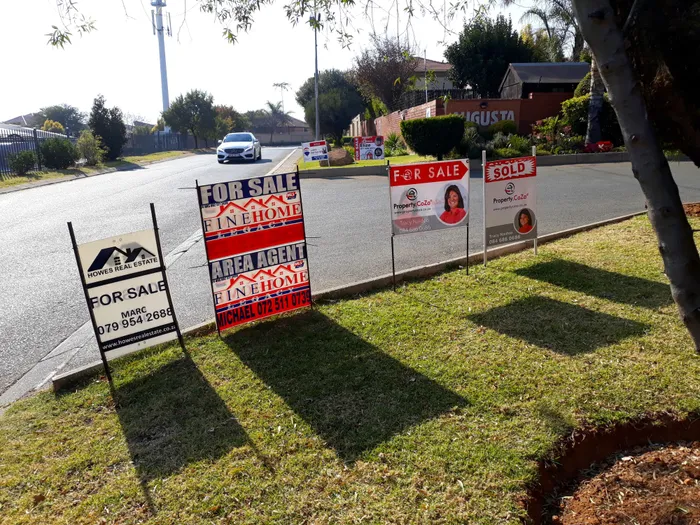
South Africa's property market is under growing pressure as homeowners, buyers, tenants and developers await the South African Reserve Bank's latest interest rate decision. Industry experts say higher borrowing costs, rising inflation and increasing living expenses have already weakened affordability, with many households struggling to absorb higher bond repayments.
Image: Karen Sandison | Independent Newspapers
South Africa's property market is under pressure as demand for housing clashes with declining affordability.
Buyers are qualifying for smaller bonds, while existing homeowners face increased repayment costs, says René Moonsamy, the chairperson of the National Debt Counselling Association (NDCA). Developers and investors are also experiencing weaker demand and higher financing costs.
The South African Reserve Bank (SARB) is scheduled to announce its interest rate decision on Thursday, July 23, following the Monetary Policy Committee meeting, a move that could further impact the market.
Asked how the upcoming interest rate announcement will affect the property market, NDCA, the organisation which represents debt counsellors operating in South Africa, said the decision will come at a difficult time for consumers and the property market.
It says that the May increase has already raised the cost of servicing home loans and debt in general, while households are simultaneously dealing with higher fuel, food, electricity and general living costs.
Inflation increased to 5% in June (from 4.5% in May – Stats SA), which could create a genuine concern for the Reserve Bank, Moonsamy says.
She adds that many consumers have very little capacity to absorb another increase.
“For homeowners who were already financially stretched, even a relatively small increase can be the difference between maintaining their payments or falling into arrears and potentially becoming overindebted.”
From a consumer and economic perspective, the NDCA says it believes the most appropriate decision would be for the MPC to keep the interest rate unchanged.
While SARB must respond to inflation risks, much of the current pressure is driven by external costs rather than excessive consumer demand.
It says the Reserve Bank must respond to inflation risks, but much of the current pressure appears to be driven by external costs rather than excessive consumer demand.
“A further increase would immediately increase the financial pressure on homeowners, tenants and businesses. Holding the rate would maintain the Reserve Bank’s cautious stance while allowing time to assess whether the May increase and current inflationary pressures are temporary or more persistent.”
In May, SARB raised the repo rate by 25 basis points to 7%, taking the prime lending rate to 10.5%. The chairperson says that although 25 basis points may sound modest, its effect must be considered together with rising food, transport and utility costs.
She adds that no matter how small the increase in debt repayments, for a household already operating without a meaningful monthly surplus, that additional amount matters.
The cumulative result is weaker affordability, slower activity and greater risk of payment distress across the economy, Moonsamy says.
The July interest-rate decision comes at a difficult time for the local property market and the broader economy, says Maphefo Sipula, the head of research and impact at Property Point.
She says the repo rate is currently at 7.0%, following the South African Reserve Bank’s 25-basis-point increase in May, while the prime lending rate stands at 10.5%.
According to Statistics South Africa (StatsSA), annual consumer inflation accelerated to 5.0% in June 2026, up from 4.5% in May, marking the highest inflation rate in two years.
The increase was driven primarily by higher transport costs, particularly fuel prices, alongside broader inflationary pressures, Property Point says.