

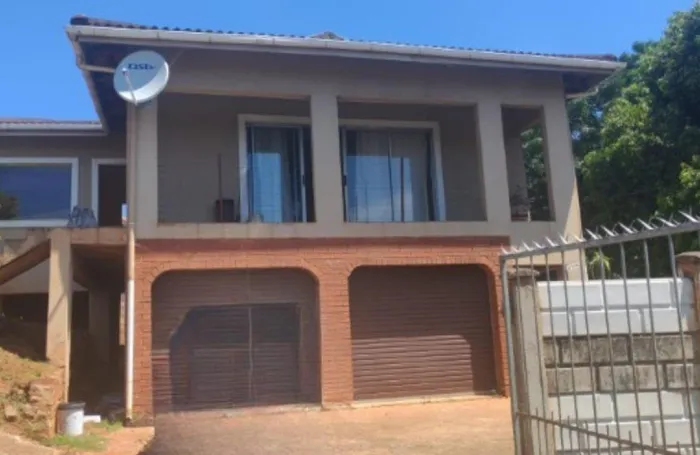
Only buyers with stable income structures, long-term financing access and institutional backing or subsidies are still active in the market at previous levels.
Image: Supplied
Unlike 2020, when the world had early warnings of Covid-19, structured briefings, and visible escalation cycles, 2026 arrived quietly but violently through the back door of the global economy.
There was no single “event moment”. No global shutdown announcement. No immediate policy response, says the RB Property Group in its July 2026 Market Intelligence Series feature article.
The property investment company says that instead, markets experienced something more dangerous: a delayed recognition shock.
“By the time inflation and interest rate pressures became visible in household budgets and project feasibility models, the underlying cause had already been in motion for months.”
The key structural disruption has been the re-escalation of geopolitical tension around the Strait of Hormuz, a critical chokepoint for global energy flows, RB Property Group says.
It says recent global research confirms the scale of this vulnerability:
As shipping constraints, insurance premiums, and rerouting risks intensified, oil prices surged in volatile waves, the property investor says. Even temporary stabilisation efforts have not removed structural risk premiums from global energy pricing, it says.
The result: Oil became the hidden tax on every economy again.
Unlike textbook inflation cycles driven by demand overheating, RB Property Group says the 2026 inflation cycle is fundamentally supply shock-driven:
Key transmission channels:
1. Energy input shock
2. Imported inflation
3. Insurance and logistics premiums
It says the combined effect is what economists are now calling "fractured inflation” - inflation that arrives unevenly, unpredictably, and without a clear cycle peak.
In the article, the company says central banks did not initially respond aggressively because:
However, it says that as inflation broadened beyond energy into services, housing, and wages, monetary authorities shifted their stance.
Giving a historical pattern comparison, it says:
Period shock-type policy response
2026 Geopolitical energy shock
It says this delay created the “silent storm effect”. By the time interest rates adjust, affordability damage has already occurred.
For the real estate sector, RB Property Group says 2026 is not defined by collapse-but by margin compression and demand distortion.
Key market shifts:
1. Reduced disposable income:
2. Higher cost of capital:
3. Demand quality shift:
4. Construction cost inflation:
The property investment company says one of the most misunderstood dynamics of 2026 is that:
Demand has not collapsed; it has been stress-tested.
It says only buyers with stable income structures, long-term financing access and institutional backing or subsidies are still active in the market at previous levels.
This creates a more competitive but smaller effective market, it says. The company adds that 2026 is not 2020; it is structurally more complex.
“Covid-19 was a visible global pause.2026 is a distributed global squeeze.”
The danger is not collapse; it is prolonged pressure without clarity on recovery timing, the company said.
For property developers, investors, and public-private partnerships, RB Property Group says the 2026 environment demands a structural shift:
Strategic realities:
Giving its positioning insight, the company says that within this environment, resilience is not defined by scale alone, but by adaptive execution capacity under uncertainty.
It says developers who survive this phase will be those who:
The defining feature of 2026 is not crisis visibility-it is crisis latency, says RB Property Group.
It says inflation did not arrive with a shock headline.
“Interest rates did not rise in anticipation. And demand did not collapse-it narrowed. For the property sector, this is not a downturn cycle. It is a filtering cycle. And in filtering cycles, only execution strength survives.”
Monday's Codera Analytics post compares how market-implied expectations of crude oil prices have changed since the start of the conflict between the US and Iran, says Daan Steenkamp, an economist and CEO at Codera Analytics.
He says that following the closure of the Strait of Hormuz to oil tankers, investor uncertainty drove the average expected 1-month-ahead price of Brent oil up from US$73 to US$115 by early May, while the variance in future price predictions more than doubled.
“This disruption also caused a sharp positive skew as buyers paid premia to hedge against extreme near-term price spikes. However, the market proved resilient, and by late June the price distribution shifted back toward pre-closure norms as extreme supply anxieties largely eased.”
In contrast, the economist says the stable distribution of one-year-ahead oil price futures over this period suggests that investors anticipated a resolution to the war and a return to normal market conditions within 12 months.