

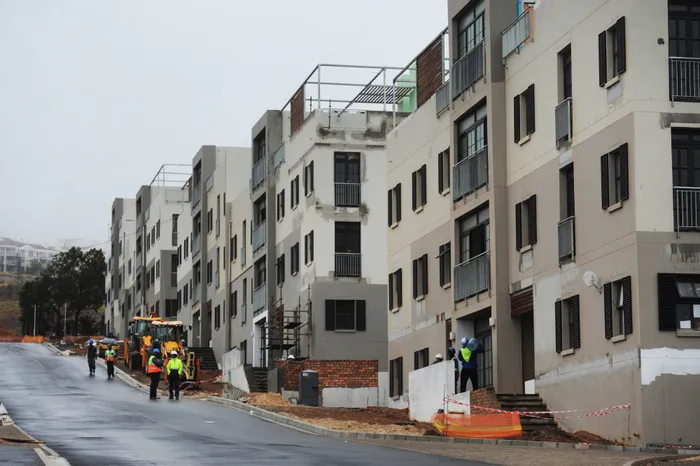
To bridge the R1.07 trillion infrastructure gap, South Africa must move beyond merely acknowledging the issue and focus on resolving the initial obstacles.
Image: Armand Hough
The average major infrastructure project in South Africa is currently facing a 41-month delay.
That is nearly three and a half years of administrative, regulatory and procurement friction before a single person sets foot on site, says Christoff Lombard, the managing director at Motla.
He says by the time a project is actually "ready to build", the original design is often outdated, the budget has been eroded by inflation, and the key personnel have moved on.
“In South Africa, the hardest part of a project isn't the engineering. It's the start. We talk a lot about 'execution', but the real friction in 2026 is Inertia."
Motla, the engineering partner for the development of state-of-the-art infrastructure, says this is the inertia gap: the space between a 'planned project" and a "physical site".
Reasons South Africa is struggling to find the "start" button:
Engineering authority isn't just about solving technical problems on-site. It's about the discipline to navigate the pre-construction minefield without losing the integrity of the original vision
According to Lombard, if South Africa wants to close the R1.07 trillion infrastructure gap, it has to stop admiring the problem and start fixing the "starting friction".
Recently, IOL News reported that when Minister of Human Settlements Thembi Simelane visited the Matlosana N12 West Catalytic Project in 2025, officials emerged from the meeting with assurances.
Governance failures would be addressed. Project structures would be revived, and construction would resume.
More than a year later, the people of Ward 15 are still waiting for houses promised to them in 2023. At Matlosana Estates Extension 10, construction has stalled. The contractor has been served with a termination notice. Residents have been called into meetings and told, once again, to be patient.
The Matlosana N12 West Catalytic Project was conceived as one of the North West province's flagship human settlements developments, with at least R4.2 billion earmarked for its completion.
Stretching across 504 hectares along the N12 corridor, it was intended to deliver more than 20,000 housing opportunities alongside schools, retail facilities and social amenities linking Klerksdorp with neighbouring communities, including Alabama, Jouberton and Roosheuwel.
Meanwhile, Dianne Davies, an independent advisor, says South Africa's housing story since 1994 is one of both remarkable achievement and persistent challenge. She says more than 3.4 million subsidised homes have been delivered, access to electricity has become nearly universal and millions more households now enjoy improved access to water and sanitation.
“Yet rapid urbanisation, population growth, rising construction costs and declining municipal infrastructure have created new pressures, particularly in Gauteng, the Western Cape and major metropolitan areas.
"While the proportion of households living in formal housing has increased substantially, many communities continue to face housing shortages, informal settlement growth, service delivery backlogs and affordability constraints.”
According to Davies, the next phase of South Africa's housing journey requires a shift from simply building houses to creating well-located, economically connected, serviced communities where people can live, work and thrive with dignity.
She says success will depend on stronger municipalities, increased investment in infrastructure, expanded affordable rental housing, and closer collaboration between government, the private sector and civil society.
Independent Media Property