

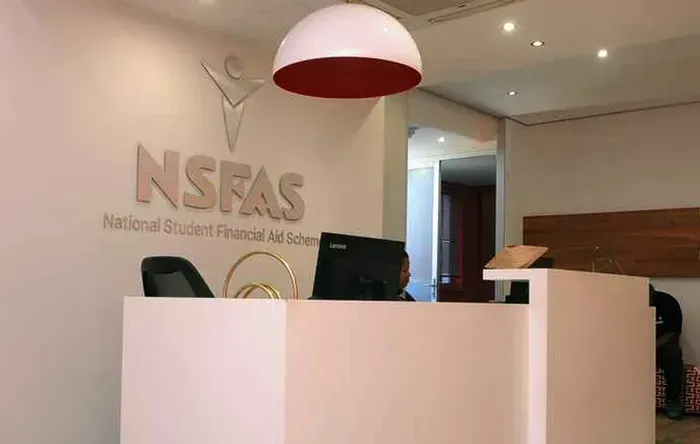
The South African National Student Accommodation Association (Sansaa) is calling for the National Student Financial Aid Scheme (NSFAS) to announce a realistic, fair, and CPI-linked adjustment for 2026 accommodation rates by the end of the first semester on June 30, 2026.
Image: Social Media
The South African National Student Accommodation Association SANSAA has given the National Student Financial Aid Scheme (NSFAS) until 30 June to announce the CPI‑linked 2026 student accommodation rates, or face a sector in crisis.
The organisation, which says it represents accommodation providers housing more than 300 000 students nationally, says South Africa is now in June, the halfway mark of the year.
Students have been accommodated since January, says Duncan Monks, the chairperson at SANSAA.
“Providers still do not know what they will be paid. This is no longer a delay-it is a crisis.”
The organisation says the cost pressures are real and well-documented. Electricity tariffs have risen by a cumulative 22.6% for Eskom direct customers across the 2025/26 and 2026/27 NERSA-approved cycles, and by approximately 21.4% for municipal customers over the same period.
It says fuel costs have increased by as much as 30%, affecting transportation, security, maintenance and procurement.
“On top of this, providers continue to carry rising municipal charges, staffing costs, security expenses, and general operational inflation-all while being required to provide safe, dignified, and compliant student housing.
Despite these pressures, SANSAA says accommodation providers have continued to honour their commitments without interruption. It says that goodwill has limits.
“For too long, landlords have had to absorb a barrage of cost increases-rising interest rates, electricity tariffs, fuel, maintenance-while NSFAS has remained silent on the 2026 accommodation rates,” says Monks.
“Landlords are making real personal sacrifices to keep students housed. They stretch their personal finances beyond bearable, affecting the sustainability of their businesses and the livelihoods of their families.
"There is only so long that landlords can absorb this pain. Something has to give. NSFAS has had long enough. 30 June is not a request-it is a deadline.”
According to the association, the delay is not only a provider problem. It says that students are already feeling it.
To cope with mounting costs, landlords have been forced to cut amenities essential to a decent student living environment, compromising the quality of life of the very students NSFAS exists to support, it says.
“If the funding model continues to ignore economic reality, providers will exit the student housing market altogether. Fewer beds, reduced services and deteriorating conditions will follow, and it is the most vulnerable students, those with no alternatives, who will bear the cost.”
Landlords, mindful of the needs of students and the country, are choosing to house students when they could deploy their capital elsewhere, Monks says. South Africa cannot afford to make that choice to look foolish.
SANSAA says it has engaged NSFAS on this matter on several occasions, including at the CEO level, but commitments were made and never honoured.
SANSAA says it therefore calls on NSFAS to announce a fair, realistic, and CPI-responsive accommodation rate adjustment for 2026 by no later than 30 June 2026, which is the end of the first semester.
It says this deadline will give providers the certainty they need to plan for the second semester. It says it is placing on record that landlords will not accept this matter remaining unresolved beyond that date. “We can’t afford to be where we are in the second semester. This crisis must be stopped,” said Monks.
In May, the NSFAS said it recognised the operational pressures faced by accommodation providers, including rising utility costs and municipal challenges.
“As a result, the Scheme remains committed to working collaboratively with sector associations and solution partners to resolve these outstanding issues by finalising the 2026 rental rates and implementing a predictable, transparent payment system.”
The scheme said that during this quarter alone, it has made three major disbursements to accommodation providers, amounting to over R1.1 billion and benefitting more than 100,000 students.
NSFAS said it will issue a monthly disbursement schedule to all accredited accommodation providers, and encouraged all providers to ensure that students’ funding status is confirmed and that valid, signed lease agreements are in place, as these are prerequisites for payment.
NSFAS added that it was legally mandated to bring the payment functionality for accommodation providers in-house from the start of 2026. It said this approach led to the resolution of several critical issues, including:
“We thank all accommodation providers for their ongoing partnership and assure all stakeholders that NSFAS is focused on long-term stability, effective administration, and the well-being of NSFAS-funded students,” NSFAS said then.
Independent Media Property