

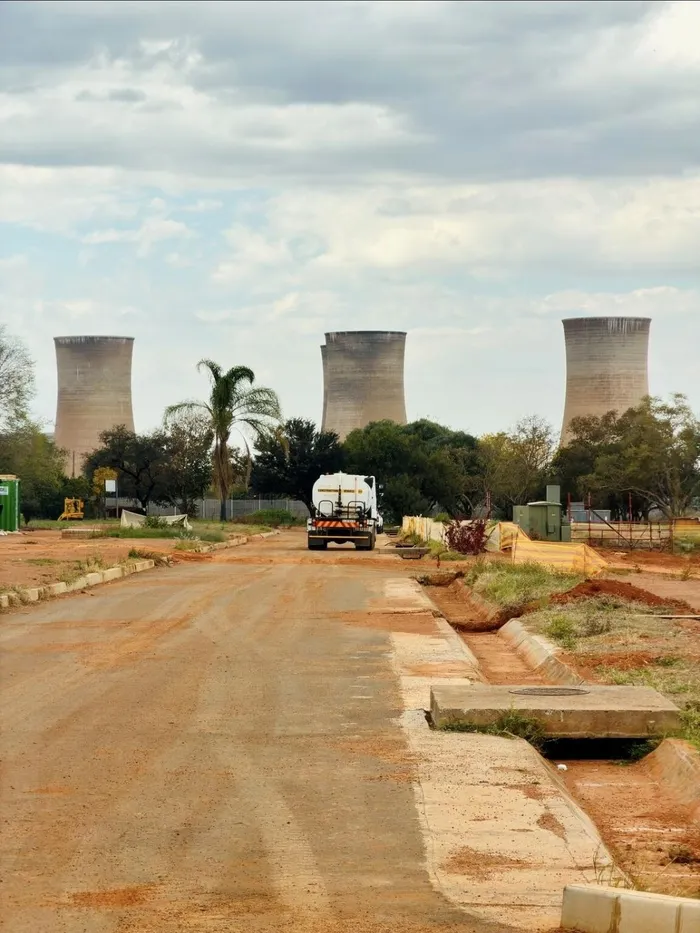
While many South Africans have adapted to load shedding, water outages remain far more disruptive to daily life.
Image: Infrastructure South Africa
Backup water systems previously associated with farms, luxury estates or drought-prone regions are rapidly becoming part of mainstream household planning.
According to Mauritz Swartz, the plumbing and water buyer for Builders Warehouse, homeowners, families, and Airbnb hosts in South Africa are re-evaluating their approach to "waterproofing" their properties. This shift comes as maintenance of infrastructure, water outages, and disruptions in supply occur with greater frequency across the country.
Reliable water supply is no longer simply a convenience, but it is becoming the essential infrastructure of a home, he says.
“Recent supply interruptions in Gauteng have once again highlighted how vulnerable households are to ageing infrastructure, maintenance backlogs and rising urban demand. And while many South Africans have adapted to load shedding, water outages remain far more disruptive to daily life,” Swartz says.
The DIY and building materials retailer says that from showering and cooking to laundry and flushing toilets, modern households simply cannot function without water for extended periods.
However, before rushing out to buy the biggest tank available, experts say homeowners should think strategically about what type of system actually suits their household and budget.
Here are six things every homeowner should know before investing in a backup water solution:
Start with how much water your household actually uses. According to Swartz, homeowners should begin by calculating daily household water consumption and how long they want to remain functional during an outage.
“As a general guideline, daily consumption averages around 150 litres per person, but during shortages this can be reduced to approximately 80 litres per person,” he explains. That means a family of four could still require more than 300 litres a day even while limiting usage.
He says bigger tanks are not always better. The right system depends on the type of property and how the system will be used. A compact townhouse may only need a small emergency backup setup for short outages, while larger or multi-storey homes may require stronger pumps and more advanced pressure systems.
Professionals recommend considering factors such as household size, number of bathrooms, frequency of outages, water pressure requirements, available installation space and budget, he says.
The company says filtration matters more than most people realise. It says that a water tank alone is not enough. “One of the most overlooked components in backup systems is filtration, particularly sediment filters that prevent sand, debris and contaminants from entering storage tanks and pumps.”
Without proper filtration:
For households relying on stored water during extended outages, filtration is critical.
According to the Plumbing & Water Buyer, there is now a backup water solution for almost every budget. The market for residential water resilience solutions has evolved rapidly, with options now ranging from entry-level systems to large-scale setups, he says.
However, Swartz says installation costs matter too. He says many consumers budget for the tank and pump, but overlook installation, plumbing integration and electrical work.
The complexity of installation can vary significantly depending on the property layout and pressure requirements, which is why professional guidance is recommended before purchasing equipment, he says.
“Water resilience is becoming the next big home upgrade. Backup water systems are beginning to join solar power, inverters and security systems as long-term household investments rather than emergency purchases. Reliable access to water is increasingly influencing property appeal, liveability and even short-term rental competitiveness.”
The retailer says they now offer a growing range of backup water and filtration solutions tailored to different household sizes and budgets, alongside financing options that help make larger systems more accessible.
He says that in today’s South Africa, reliable running water is quickly becoming one of the most valuable household essentials of all.
On Thursday, Infrastructure South Africa said as part of Impact Month, its team visited the Rooiwal Wastewater Treatment Works (WWTW) to assess progress on this transformative water reuse project, which aims to strengthen long-term water security in the City of Tshwane.
The infrastructure centre of excellence was established as a single point of entry for infrastructure planning, management and delivery. With the Bankable Feasibility Study and Detailed Business Case nearing completion, the project is progressing towards the next phases of development and procurement.
Once implemented, ISA says the project is expected to improve water resilience, support economic growth, create employment opportunities and contribute to South Africa's long-term infrastructure and water security objectives.
In March, Wisane Mavasa, the spokesperson for the Department of Water and Sanitation said South Africa is currently faced with water supply challenges in many parts of the country due to systemic issues including poor or inadequate planning and investment, years of neglect of water supply infrastructure, rising water demand from economic and population growth, urbanisation, and unsustainable practices, intensified by pollution rendering water unfit for use.
In response to mounting demands and insufficient infrastructure, President Cyril Ramaphosa has declared water supply challenges a national crisis.
During his State of the Nation Address (Sona) in February this year, the President announced a comprehensive national intervention, drawing on the successful multi-agency model applied to stabilise the energy sector.
To centralise and accelerate recovery, the government has established the National Water Crisis Committee, chaired by the President.
This body will coordinate all state efforts to address the water crisis, drive the required reforms in the water sector, and deploy national resources and technical experts to struggling municipalities.
DWS is currently implementing various bulk water supply schemes in some parts of the country to ensure that there is sufficient potable water for municipalities to supply to communities.
Independent Media Property