

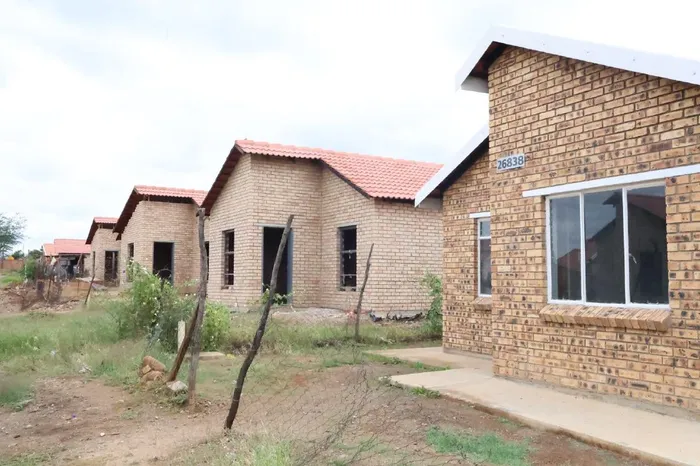
Legacy housing models often push lower-income households to the urban periphery, resulting in their distance from essential jobs, transport and opportunities.
Image: Supplied
Housing sits right at the centre of South Africa's development agenda, which requires bold and scalable solutions.
In a LinkedIn post, the Public Investment Corporation (PIC) says it continues to position social infrastructure as a strategic priority, with a strong focus on high-density urban housing.
“By investing in Divercity Property Group, the PIC is supporting a model that challenges the status quo of urban development.”
Last month, Lindiwe Kwele, the CEO at the Gauteng Partnership Fund (GPF), said that the reality is that South Africa’s housing backlog, now estimated at 2.6 million units, continues to grow amid rapid urbanisation and the expansion of informal settlements.
The wholly-owned SA government asset management firm highlights Divercity's strategy as both simple and impactful: creating well-situated, amenity-rich areas that prioritise affordable rental accommodation for households with low and middle incomes.
This approach, according to the firm, fosters communities closer to economic hubs, with superior connections to essential services, and structured for enduring sustainability.
“This stands in clear contrast to legacy housing models that push lower-income households to the urban periphery, far from jobs, transport and opportunity.”
Notable developments in Divercity's portfolio include:
At the core, PIC says this is more than property investment. It says this is about reshaping urban living and enabling inclusive economic participation.
Meanwhile, Lightstone Property says the inner city still plays an important economic role; its property market has been shaped by structural shifts.
The insights provider says many businesses, homeowners and renters left due to the high levels of “crime and grime” in Johannesburg city over the past decades, and while the CBD’s growth rate lags suburbs in greater Johannesburg, its proportion of negative sales is higher.
Joburg’s CBD’s growth rate and proportion of negative sales are said to be significantly worse than those of the areas outside of the CBD.
“There are approximately 15 500 properties registered at the Deeds Office in Braamfontein, Joubert Park, Doornfontein, New Doornfontein, Johannesburg Central, Newtown, City and Suburban and Marshalltown. This total includes each unit in a sectional scheme property”, says Hayley Ivins-Downes, managing executive real estate at Lightstone Property.
“The 2 050 transactions between 2021-2025 were up slightly on the 1 900 transactions between 2016-2020, but the number of properties covered by these transactions was significantly up, from 2 250 to 3 250,” says Ivins-Downes.
One third of the properties transferred in the last five years involved AFHCO, as either a buyer or seller. Atkinson House in the inner-city is a prime example of repurposing surplus office stock into affordable housing. In this case, 485 studio units ranging from 11 to 25 square meters.
Founded in 1996, AFHCO is said to remain the leading property company in affordable housing and commercial property in the Johannesburg inner-city.
Lightstone says the Johannesburg CBD property market is undergoing a gradual transition.
It says that while office and some retail properties face structural challenges, residential conversions, mixed-use redevelopment and continued demand for logistics facilities present opportunities for repositioning and long-term regeneration of the area.
All in all, Lightstone Property says SA’s economic hub could be at a fork in the road, with better times signposted. Jozi may not yet be “doing just fine”, as Orville Peck sang in “City of Gold”, but perhaps soon it will be, it says.
Independent Media Property