

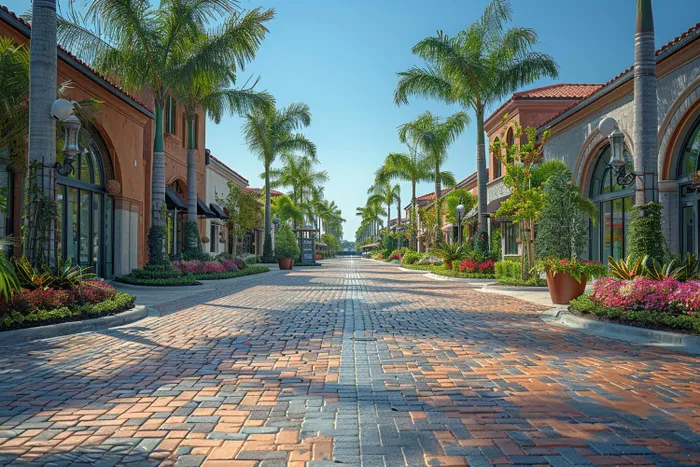
Even behind pristine gates, ageing infrastructure and mounting costs pose a hidden risk for luxury estate homeowners.
Image: Freepik
South Africa’s gated estates offer a dream of manicured lawns and five-star security, but a "governance gap" is leaving many homeowners, and their wallets, vulnerable.
For many South Africans, moving into a luxury estate is the ultimate goal. You get the golf course, the clubhouse and the peace of mind that comes with 24-hour patrols.
But while these estates look like private resorts, many are being managed like small-town social clubs, and experts warn that this "amateur" approach is a ticking financial time bomb.
The scale of the estate market in South Africa is staggering. There are now over 490 000 homes in gated communities nationwide, four times more than in 2003. Collectively, these properties are worth more than R1 trillion.
The problem? Many of these estates are still governed by frameworks designed for simple volunteer committees, rather than the complex "private micro-economies" they have become.
"Luxury estates are no longer just neighbourhood associations," says Johlene Wasserman, a director at Sandton-based law firm VDM Incorporated. "They are high-value environments with financial stakes that mirror large corporations. Yet their management hasn't evolved at the same pace as their property values."
If you sit on your estate’s board, you might think you’re just doing a neighbourly favour. Think again.
Because most homeowners’ associations (HOAs) are registered as non-profit companies, they fall under the Companies Act. Recent court cases have confirmed that estate directors have the same "fiduciary duties" (legal responsibilities) as the CEO of a major bank.
"The law does not lower the bar just because a board is made up of residents," Wasserman explains. If the board makes a mess of the finances or fails to follow the rules, the directors can be held legally and personally liable.

With nearly 490 000 homes in gated communities nationwide, South Africa’s luxury estates have become multi-million rand micro-economies requiring professional management.
Image: Freepik
The biggest threat to a homeowner’s bank account isn’t a security breach; it’s an ageing road. Many of South Africa’s premier estates were built 15 to 25 years ago, meaning their infrastructure is reaching its "expiration date" all at once.
The costs are eye-watering:
Unlike a suburb, an estate cannot ask the municipality for help. If the board hasn't been diligently saving into a "reserve fund" for the last two decades, the residents have to foot the bill via special levies - sudden, massive payments that can reach hundreds of thousands of rands per household.
The days of buying a house based on a glossy brochure are over. In the R10 million-plus market, buyers are starting to act like corporate auditors.
"They are asking for financial statements, reserve fund details and proof of how rules are enforced," says Wasserman. "An estate's reputation is no longer built on its clubhouse; it’s built on how stable its governance is."
As estates take over roles once held by the government - like maintaining roads and managing utilities - they need "institutional-grade" management. This means professional audits, formal board training and long-term financial modelling.
For those living behind the boom gates, the message is clear: the "lifestyle" is only as secure as the paperwork in the estate office.
In the luxury market, good governance is no longer just a "nice-to-have"; it’s the only thing protecting your investment.