

Absa’s internal personal loan data, that home improvement accounts for 23.94% of all loans booked, with a 9.6% year-on-year increase among customers in lower LSM segments.
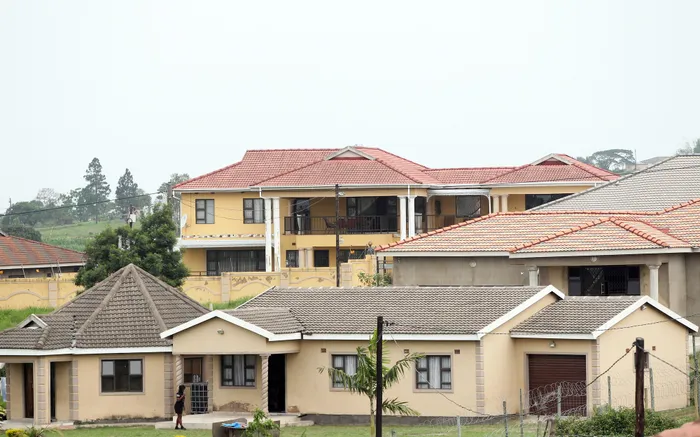
Image: Doctor Ngcobo.
Many South Africans are increasingly using personal loans to finance home construction and renovations.
However, using this method to achieve their home ownership and improvement goals often results in higher interest rates, as the credit is not specifically structured for costs related to construction.
To address this gap, Absa has partnered with Cashbuild to introduce tailored in-store finance, allowing customers to apply for funding where they buy their materials, with pricing based on their individual circumstances.
The partnership launched at the Cashbuild Southgate store and will initially be piloted across 11 locations in South Africa. This is open to customers, regardless of whether they bank with Absa or not.
They can apply for finance for building materials in-store or through Absa’s call centre, with same-day approval subject to the relevant credit checks and required documentation.
There were the same concerns from homeowners who are using personal loans with tight repayment terms and high interest rates to fund their building and renovation projects, says Vuyo Nohamba, executive for Personal Loans at Absa Personal and Private Banking.
“For customers building on tribal or rural land, traditional home loans are usually not an option because there is no formal title, which leaves unsecured credit as the only route. For others making general improvements, finding the right type of financing also matters,” Nohamba adds.
In December, an estimated 90% of South Africans have cash-built homes one brick at a time without access to formal credit.
This was said to be about R2 to R3-trillion worth of real estate transforming the rural and township property landscape. It was said to be happening without access to title deeds, pay slips or even formal jobs.
The complexity of township home ownership, tribal land ownership and RDP homes means the chance of getting title deeds is extremely slim, said informal sector guru, GG Alcock, then.
“By offering finance where customers buy their materials, we are making the process simpler and aligning it closer to how people actually build,” Nohamba says.
“We wanted a simpler and more practical approach. Customers apply where they shop, pricing is tailored to their individual circumstances, and the cost of materials is paid directly to the retailer. If there is a balance after that, it can be used for related costs such as labour or delivery.
"It gives customers structure where it matters and flexibility where they need it. There are no collateral or occupation requirements to qualify for finance.”
The partnership, aligned to Absa’s vision of pursuing new growth opportunities through strategic partnerships, responds to clear patterns in how South Africans are approaching home ownership and renovation.
According to Absa’s internal personal loan data, home improvement accounts for 23.94% of all loans booked, with a 9.6% year-on-year increase among customers in lower LSM segments.
Additionally, data from the Absa Homeowner Sentiment Index for the fourth quarter of 2025 shows that 78% of respondents are considering renovations. At the same time, 37% say they cannot afford to renovate, and 35% cite the cost of materials as a barrier.
The figures point to strong demand, alongside clear affordability pressure.
Absa says it is committed to enabling home ownership and improving living conditions across all segments of society, including the millions of households that build incrementally or in informal markets.
For many families constructing on communal, tribal or untitled land, traditional mortgage products are not accessible, which often forces them into costly, short‑term credit.
By developing financing solutions that reflect how people actually build and improve their homes, Absa aims to expand access to safe, affordable housing and support the growth of local building ecosystems that are vital to communities.
Meanwhile, this week, Rainmaker Marketing announced the launch of Rainmaker Marketing Property Finance through their collaboration with South Africa’s online home loan marketplace.
According to Stefan Botha, director of Rainmaker Marketing, this strategic expansion in partnership with MortgageMarket is designed to close the critical gap between buyer intent and bond approval.
“In an environment where strong enquiry volumes do not always translate into concluded sales, this launch marks a significant shift.
"By embedding home loan facilitation directly into the property sales journey, we are helping developers to convert demand into funded transactions with greater certainty and efficiency, while ensuring the investor fully understands their own buying power right upfront,” says Botha.
Last year, Tsekiso Machike, the spokesperson of Human Settlements Minister Thembi Simelane, told "Independent Media Property" that the South African property sector faces challenges with the housing accessibility opportunities for the gap market.
He said the gap market pressures are felt more strongly in metropolitan municipalities, intermediate cities and small towns.
All stakeholders in the value chain must find long-lasting solutions to this challenge since the gap market challenges drive the proliferation of informal settlements, Machike said.
Accordingly, working with all stakeholders, including the private sector, traditional leaders and NGOs, amongst others, is the only solution to provide adequate housing for those in need, he said then.
Independent Media Property