

The index measuring activity growth has deteriorated for the second consecutive quarter. Despite this, it remains above the long-run average.
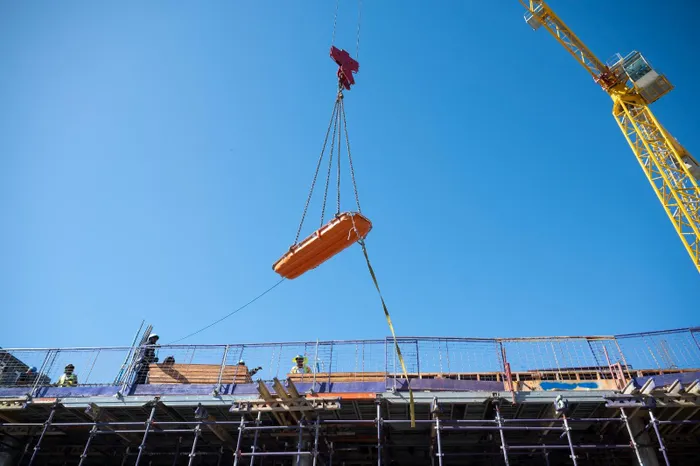
Image: Armand Hough / Independent Newspapers
The FNB/BER Civil Confidence remained unchanged in the second quarter of 2026, holding steady after a sharp 9-point drop to 43 in the first quarter, as the construction sector showed mixed signals between improving order books and softer activity growth.
While the headline index was stable, more than 55% of respondents reported dissatisfaction with prevailing business conditions, reflecting ongoing pressure in the sector. Growth in construction works also slowed marginally over the period.
The measure tracking activity growth declined for a second consecutive quarter, although it remained above its long-term average, suggesting resilience despite weaker momentum.
FNB senior economist Siphamandla Mkhwanazi said the survey pointed to a likely easing in construction activity this quarter, driven by a higher cost environment and elevated uncertainty linked to geopolitical tensions.
“Based on the survey results, growth in construction works likely eased this quarter. This is largely due to the higher cost environment and the uptick in general economic uncertainty resulting from the US-Iran war,” he said.
He added that base effects were also likely influencing the reading, given strong activity growth in the second quarter of 2025. The survey compares current conditions with the same period a year earlier.
According to Statistics South Africa, the real value of construction works rose 5.1% year-on-year in the first quarter of 2026, following a 0.2% contraction in the final quarter of 2025.
Mkhwanazi said momentum could return if stability improves in global markets.
“We should see work regain momentum if the current Middle East peace deal holds and normal trade flows resume. Demand from, among others, the energy, mining, and transport infrastructure sectors will persist,” he said.
The survey also showed that higher input costs have intensified competition in tender pricing, although overall profitability remained stable compared with the previous quarter.
“For existing contracts, firms seem to have been able to pass on some of the higher input costs to clients,” Mkhwanazi said.
The index measuring insufficient new demand as a constraint — a proxy for order books — moved further below its long-term average, indicating an improvement in order books.
Mkhwanazi said this helped offset weaker activity growth and increased price competition, supporting overall sentiment.
“On balance, the results were encouraging. The negative effect of rising input costs on work was expected, and activity should rebound once these cost pressures normalise, which is looking increasingly likely given the latest geopolitical developments,” he said.
The findings broadly align with the Afrimat Construction Index, which showed a marginal 0.3% year-on-year increase in construction activity in the first quarter, driven by gains in construction works, buildings completed, employment and building materials sales.
Afrimat economist Dr Roelof Botha said that while construction activity remained subdued, the index had recorded three consecutive quarters of seasonally adjusted growth — the first such streak since the brief 2020 recession period.
IOL Business