

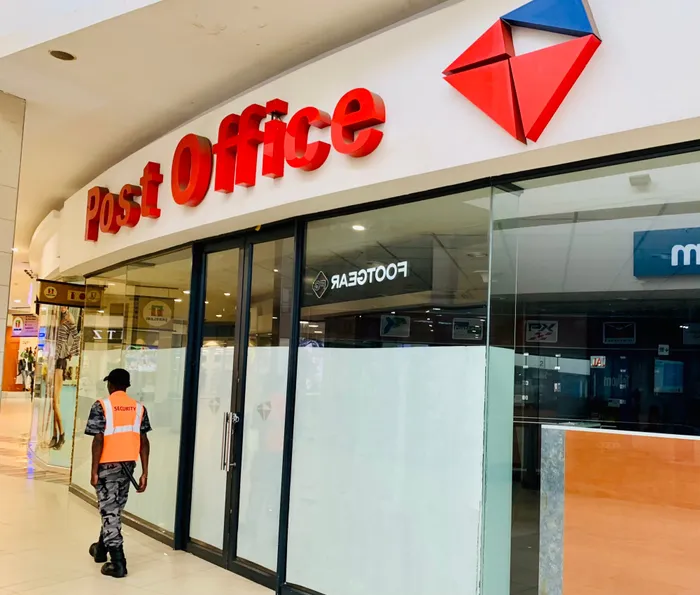
The Business Rescue Practitioners (BRPs) of the South African Post Office (SAPO) have pushed back against claims that the state-owned entity lacks a credible turnaround plan
Image: Bhekikhaya Mabaso / Independent Newspapers
The Business Rescue Practitioners (BRPs) of the South African Post Office (SAPO) have pushed back against claims that the state-owned entity lacks a credible turnaround plan and that the R3.8 billion funding referenced in its business rescue plan was never committed.
This follows comments last week by Sonja Boshoff, Chair of the Select Committee on Economic Development and Trade, who said the government had made no such commitment and warned that relying on unapproved funding could mislead workers and the public.
BRPs said the R3.8 billion was included in SAPO’s approved business rescue plan and referenced in government submissions. They added that while only R2.4 billion has been released, it has helped cover operating costs and creditor payments, and that a clear turnaround plan exists to stabilise and improve the Post Office.
The BRPs also said that, as a state-owned company, SAPO cannot borrow money from banks or outside lenders without government approval, making funding from the state the only way to carry out the plan.
"The R3,8 billion was earmarked to complete various final aspects of the Plan, which included, inter-alia, infrastructure upgrades, digitisation of the business, working capital requirements and the payment of the conditional top-up dividend to the statutory and payroll creditors. This was included in all presentations made by the BRPs to DCDT and National Treasury after the adoption of the Plan in December 2023".
"The lack of payment of the second tranche of funding as anticipated in the Plan has made it impossible for the BRPs to fully implement the Plan and file a notice of substantial implementation, which would effectively terminate the business rescue proceedings".
BRPs also said that progress has been made in restructuring SAPO’s operations, reducing costs, and improving its financial position.
"The branch footprint has been rationalised to 657 branches. Operating costs, including staff costs, were restructured to create a more sustainable cost base. Operating losses were brought down through these efforts, and neglected areas of the business, like IT infrastructure costs, marketing, brand development, new product lines, maintenance and logistics were earmarked for attention to improve the revenue of SAPO".
IOL Business