

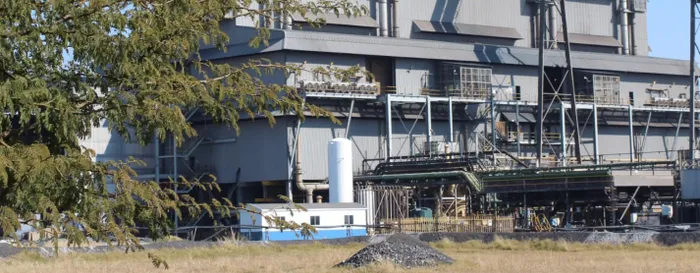
The company supports approximately 2,230 direct jobs and 2,665 indirect jobs, while sustaining nearly 4,000 permanent mining jobs across Mpumalanga, Limpopo and the North West.
Image: Supplied
Trade union Solidarity has welcomed Samancor Chrome’s decision to halt its retrenchment process and gradually restart smelter operations, saying the development demonstrates how competitive electricity tariffs can help save jobs and revive South Africa’s struggling ferrochrome industry.
The announcement comes after Samancor secured an improved electricity tariff agreement with Eskom, alongside a five-year pricing outlook that provides greater certainty for its operations.
Under the approved framework, Eskom will charge Samancor an electricity tariff of 62 cents per kilowatt-hour, with annual increases linked to South Africa’s Producer Price Index plus one percentage point.
Samancor had previously initiated a Section 189A retrenchment process amid mounting cost pressures. The company supports approximately 2,230 direct jobs and 2,665 indirect jobs, while sustaining nearly 4,000 permanent mining jobs across Mpumalanga, Limpopo and the North West.
Solidarity on Thursday said the breakthrough should serve as a model for other smelting companies that remain under threat from high electricity costs and uncertain operating conditions.
According to Solidarity sector coordinator, Cornelius van Leeuwen, the outcome highlights the importance of cooperation between industry, government and Eskom in protecting jobs.
“Samancor’s announcement proves that solutions are possible when all stakeholders work together. This is excellent news for employees and their families, but it cannot mark the end of the process,” Van Leeuwen said.
“There are still companies waiting for the certainty they need before they can bring their own retrenchment processes to an end.”
The union also praised Samancor management, including CEO Desmond McManus, as well as Eskom and government representatives involved in negotiations that resulted in the revised tariff agreement.
The latest development follows a similar decision by Glencore-Merafe in May to withdraw retrenchment plans after securing improved electricity pricing arrangements.
The Glencore-Merafe Chrome Venture employs more than 2,000 workers directly and supports an additional 1,333 contractor positions. The venture is also estimated to underpin almost 24,000 indirect jobs through its linkages with the chrome and platinum mining value chains.
For labour representatives, the focus has now shifted to other ferrochrome producers that continue to face uncertainty.
Van Leeuwen said Solidarity was particularly concerned about the future of companies such as Ferroglobe and Transalloys, which are still navigating challenging operating conditions.
“Our attention is now focused particularly on companies such as Ferroglobe and Transalloys. We hope that the same pragmatic approach that has protected jobs at Samancor and Glencore-Merafe will also be extended to Ferroglobe, Transalloys, and other smelters,” he said.
South Africa's ferrochrome industry has faced years of pressure due to rising electricity tariffs, unreliable power supply and increasing global competition. The sector, once a global leader in ferrochrome production, has seen numerous smelters either shut down or reduce production because of escalating energy costs.
Electricity remains one of the largest input costs for ferrochrome producers, whose operations require large amounts of energy to process chrome ore into ferrochrome used in stainless steel manufacturing.
Industry stakeholders have repeatedly argued that without competitive power pricing, South Africa risks losing further beneficiation capacity and export opportunities despite possessing some of the world's largest chrome reserves.
Solidarity said recent developments suggest that tailored electricity tariff agreements could provide a viable path to recovery for the industry.
“Every smelter that remains operational protects not only hundreds or even thousands of direct jobs. It also safeguards contractors, local businesses, municipal economies, and South Africa’s ability to add value to its mineral resources,” Van Leeuwen said.
The union warned that prolonged uncertainty could have severe consequences for workers and communities dependent on the ferrochrome sector.
“Every day of delay places additional pressure on employees, their families, and the communities that depend on these industries,” he added.
Solidarity has called on Eskom, government and industry stakeholders to expedite outstanding negotiations to prevent further job losses and restore confidence in the sector.
The union believes the successful outcomes achieved at Samancor and Glencore-Merafe provide a blueprint for safeguarding employment and sustaining industrial activity in one of South Africa’s most important mineral beneficiation industries.
“Samancor and Glencore-Merafe have shown what is possible. We must now ensure that the same success story is repeated at Ferroglobe, Transalloys, and the remaining smelters,” Van Leeuwen said.
BUSINESS REPORT