

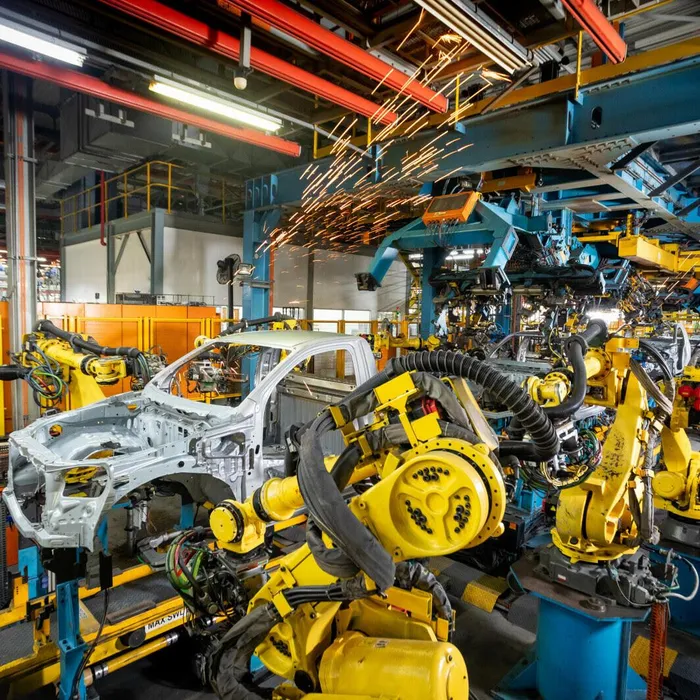
As a result, the new D-MAX programme has achieved the localisation of 250 components, increasing local content beyond levels achieved under the previous generation model.
Image: Supplied
Isuzu Motors South Africa has invested R510 million in supplier tooling and capability development, strengthening South Africa's automotive manufacturing sector while supporting localisation, job creation and skills development across its supplier network.
The investment formed a critical part of the development programme for the new ISUZU D-MAX and enabled local suppliers to expand production capacity, improve manufacturing capabilities and meet the company's global quality standards.
Through the programme, 729 vendor tools were developed across Isuzu Motors South Africa's supplier network, supporting the production of 250 locally sourced components for the new D-MAX.
According to Komane Pitso, executive vice president for procurement and logistics at Isuzu Motors South Africa, supplier development remains central to the long-term sustainability of South Africa's automotive industry.
"Developing capable and competitive local suppliers is fundamental to the sustainability of South Africa's automotive industry," Pitso said.
"Our investment extends beyond vehicle production. It is about creating opportunities for suppliers to grow, strengthening manufacturing capability and building a resilient supply chain that can support future vehicle programmes."
The investment has delivered significant economic benefits in the Eastern Cape, where Isuzu's manufacturing operations are based, contributing to employment creation and the expansion of local industrial capacity.
Among the beneficiaries is VSL Manufacturing, which was incubated as part of Isuzu's localisation strategy to support large stamping operations. The company created 52 new jobs and now produces 25 large pressed skin panels for the new D-MAX, including bonnets, body side panels, front and rear doors and tailgates.
Another supplier, Praga Group, expanded its operations and created 34 new jobs to manufacture stamped and welded chassis frame assemblies supplied directly to Isuzu's assembly plant in Gqeberha.
Beyond employment gains, Isuzu said the localisation programme has accelerated technical skills development and technology transfer within South Africa's automotive supplier base.
"Localisation is a major enabler of skills development because it gives suppliers direct exposure to world-class automotive manufacturing requirements. Throughout the localisation journey there is extensive knowledge transfer with our international counterparts covering quality planning, process control, dimensional validation, tooling development and production readiness," Pitso said.
"Ultimately, localisation is not only about producing parts locally, but about building sustainable industrial capability in South Africa."
The programme included extensive collaboration with Isuzu Motors Limited in Japan, Isuzu Thailand and international technical partners to ensure South African suppliers could meet the group's global manufacturing standards.
As a result, the new D-MAX programme has achieved the localisation of 250 components, increasing local content beyond levels achieved under the previous generation model.
Locally manufactured components now include bonnets, grilles, tailgates, body side panels, door inners and outers, seat trim components, chassis frame assemblies, brake pedals, knuckles and selected plastic parts.
Pitso said localisation remained a key strategic objective because it strengthened South Africa's industrial base while improving competitiveness.
"We localise as much as possible where it makes sound business sense. Localisation enables us to leverage local manufacturing capability, reduce import duties and logistics costs, while simultaneously strengthening South Africa's automotive and manufacturing supply chain and industrial capability," he said.
The latest D-MAX programme has expanded localisation through styling upgrades, deeper localisation of chassis components and increased production of large stamped body panels.
Pitso said the project demonstrated how supplier development and localisation can support both business objectives and broader economic growth.
"The new ISUZU D-MAX represents a significant step forward in localisation while remaining aligned to ISUZU's global manufacturing standards and maintaining the trusted reliability that customers expect. This programme has been supported through investments from both IMSAf and local suppliers in tooling, capability upgrades and production readiness."
Looking ahead, the company said it remains committed to the goals of the South African Automotive Masterplan through continued investment in supplier development, small business growth and localisation initiatives.
"We will continue to play a meaningful role in strengthening South Africa's automotive manufacturing ecosystem. By supporting supplier development and growing local manufacturing capability, we are contributing to the long-term competitiveness and sustainability of the industry," Pitso said.
BUSINESS REPORT