

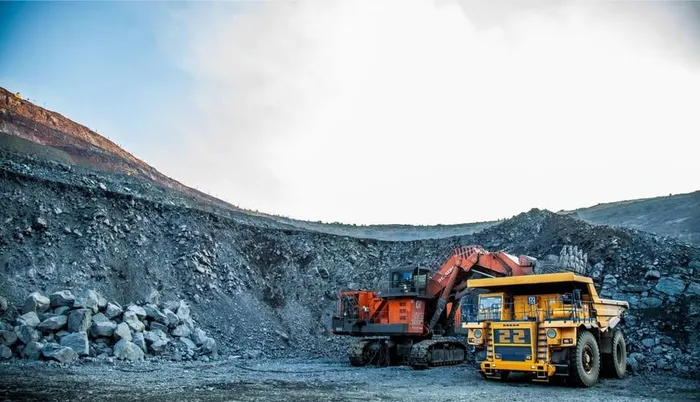
TAU Mining has recently partnered with Vedanta at the Gasmberg mine, TAU will become a key player in the daily operations of Gamsberg mine. TAU is responsible for various opencast mining services that consist of Drilling and Blasting, Road construction, Load and haul of diffent materials such as Softs, Watse and Ore.
Image: Supplied
The Northern Cape High Court has granted TAU Mining Contractors leave to appeal a ruling that denied it the right to immediately enforce a previous court order restoring possession of a disputed mining area at the Gamsberg Zinc Mine near Aggeneys.
In a judgment delivered on Friday, Judge Lawrence Lever ruled that TAU Mining had established reasonable prospects of success on appeal and granted leave to approach the Supreme Court of Appeal (SCA).
The ruling means the dispute over whether Tau Mining may immediately enforce the spoliation order before the finalisation of appeals will now be determined by the SCA, adding another chapter to a complex legal battle involving mining rights, liens and access to one of South Africa’s largest zinc mining operations.
The latest development stems from a long-running legal battle between TAU Mining Contractors, Aveng Moolmans and Black Mountain Mining over access to a section of the Gamsberg Mine.
The dispute originated in October 2024 when TAU Mining approached the court on an urgent basis, claiming it had been unlawfully dispossessed of a portion of the mine where it had exercised contractual and enrichment liens.
In November 2024, the court granted TAU Mining a mandament van spolie order, restoring possession of the mining area. The ruling recognised that TAU Mining was in possession of the area in order to assert both a debtor-and-creditor lien and an enrichment lien.
Aveng Moolmans and Black Mountain Mining subsequently sought leave to appeal the spoliation judgment. TAU Mining responded by launching a separate application under Section 18(3) of the Superior Courts Act, seeking permission to enforce the spoliation order despite the pending appeals.
However, in February 2026, Judge Lever dismissed TAU Mining’s Section 18(3) application, finding that the company had failed to meet the stringent requirements needed to enforce a judgment while appeals were underway.
TAU Mining then sought leave to appeal that decision.
Central to TAU Mining’s argument was the contention that delays caused by the appeal process could permanently destroy the value of its enrichment lien.
The company argued that the specific mining area over which it sought to exercise its rights had an estimated lifespan of only 30 months. Continued mining during the appeal process would result in the extraction of ore from that area, effectively eliminating the security and leverage provided by the lien.
TAU Mining further contended that once the ore was mined, the lien and the bargaining power associated with it would be lost forever. The company argued that this would leave it without an effective remedy, particularly in light of concerns it had raised regarding Black Mountain Mining’s financial position and ongoing winding-up proceedings.
Counsel for Black Mountain Mining opposed the application, arguing that a lien functions merely as a defensive right rather than a cause of action and possesses no independent value.
The company maintained that TAU Mining’s claims of irreparable harm were overstated and that granting enforcement rights would cause significant prejudice to mining operations, which are governed by approved mining plans and regulatory obligations.
In considering the competing arguments, Judge Lever acknowledged that his earlier Section 18(3) ruling had not fully addressed the significance of TAU Mining potentially losing what he described as a “real right” through the erosion of the enrichment lien.
The judge found that another court could reasonably conclude that the loss of the lien constituted both exceptional circumstances and irreparable harm as contemplated by Sections 18(1) and 18(3) of the Superior Courts Act.
“Another court might find that this constitutes both exceptional circumstances and irreparable harm,” Judge Lever stated in his judgment.
The court concluded that TAU Mining had demonstrated a sound and rational basis for believing that it could succeed on appeal. As a result, leave to appeal was granted.
While TAU Mining argued that the matter should be heard by a full bench of the Northern Cape Division because it largely involved factual issues, Black Mountain Mining successfully persuaded the court that the SCA was the appropriate forum.
The court noted that the SCA is already involved in related aspects of the broader dispute and that the case raises novel legal questions warranting consideration at that level.
Judge Lever ordered that the costs of the leave-to-appeal application will be costs in the appeal.
BUSINESS REPORT