

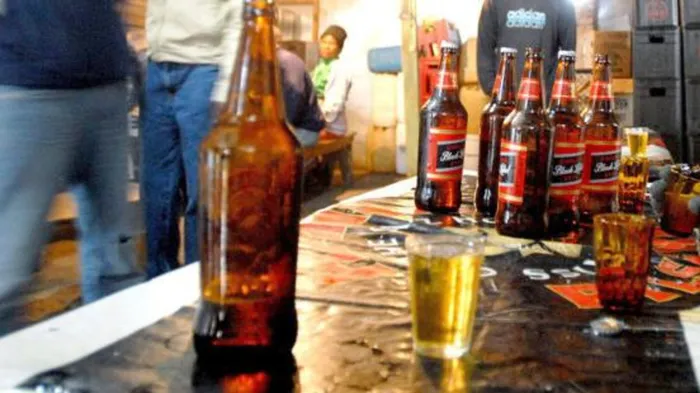
The report, released by the Gauteng's new MEC for Economic Development Vuyiswa Ramokgopa last weekend, details widespread governance failures, administrative paralysis, corruption risks and enforcement inconsistencies within the provincial liquor licensing system.
Image: File.
The Gauteng Liquor Traders Association (GLTA), representing more than 35 000 township liquor traders across the province, has welcomed the release of the Gauteng Liquor Board Committee of Inquiry report, saying it confirms long-standing complaints of regulatory dysfunction that have stifled small businesses and threatened livelihoods.
The report, released by the Gauteng's new MEC for Economic Development Vuyiswa Ramokgopa last weekend, details widespread governance failures, administrative paralysis, corruption risks and enforcement inconsistencies within the provincial liquor licensing system.
In a statement on Thursday, the GLTA said the findings mark a turning point in a sector it says has operated for years under uncertainty and contradictory enforcement.
GLTA spokesperson Jongikhaya Kraai said the publication of the report was a long-awaited step toward restoring accountability in the sector.
“For a very long time, traders have been operating in an environment of uncertainty, contradictions and administrative dysfunction,” said Kraai.
“We welcome the fact that this report has now finally been released publicly and we hope it marks the beginning of rebuilding a regulatory system that is lawful, transparent and fit for purpose, one that recognises the economic contribution of township businesses, protects the rights of small business owners, and reflects the realities of the communities in which they operate,” said Kraai.
The association said the inquiry confirms what township traders have experienced on the ground: a fragmented regulatory environment marked by inconsistent enforcement, disputed permits and unclear administrative processes.
It argued that these challenges have directly affected investment, employment and business sustainability in township economies.
The GLTA said it is particularly concerned that despite detailed findings on governance failures within the Gauteng Liquor Board, the report does not adequately resolve the long-standing legal uncertainty surrounding shebeen permits.
This issue is expected to dominate a provincial mass meeting scheduled for Tuesday 19 May, where thousands of traders will gather to discuss the report and ongoing court proceedings linked to liquor licensing disputes.
At the centre of the controversy is a 2012 provincial gazette provision that allows the lawful transfer of shebeen permits to immediate family members and deceased estates. However, traders say enforcement practices have often contradicted this legal framework, leading to confusion and legal challenges.
“The tragedy is that many traders believed they were complying with the law. Families followed official processes, received documentation from the government itself, paid fees and continued operating in good faith, only to later be told that their permits are somehow invalid,” Kraai said.
He added that the uncertainty has had a severe impact on township businesses that rely on liquor trading as a primary source of income. Many of these businesses, he said, have been passed down through generations and form a key part of local township economies.
According to the GLTA, the report highlights deep structural weaknesses in regulation but falls short of addressing the practical consequences faced by traders on the ground. The association argues that without urgent legal clarity, the sector will remain unstable despite any administrative reforms introduced by government.
“This is one of the most urgent unresolved issues facing the sector,” said Kraai. “You cannot speak about township economic development while leaving thousands of township businesses trapped in legal uncertainty.”
The association has welcomed signals from Ramokgopa, who has pledged to restore order and accountability within the liquor regulatory environment. It said it views this as an opportunity for constructive engagement between government and traders.
“We believe there is now an opportunity to move away from conflict and toward constructive reform,” Kraai said. “The new MEC has spoken about ethical leadership, accountability, economic inclusion and rebuilding institutions. Those are exactly the principles that township traders have been calling for.”
The GLTA said it supports regulation of the liquor sector, but insisted that it must be lawful, predictable and development-oriented rather than punitive or contradictory. It warned that ongoing instability undermines not only businesses but also employment in communities where formal job opportunities remain limited.
“The future of this sector cannot be built on fear, raids, contradictions and uncertainty,” Kraai said. “We need a modern, transparent and lawful regulatory system that protects communities while also recognising the economic contribution of township businesses, and the spatial challenges and historical background they operate under.”
The association confirmed it will engage government in the coming weeks on possible reforms arising from the inquiry report, while continuing to mobilise traders ahead of its 19 May mass meeting.
BUSINESS REPORT