

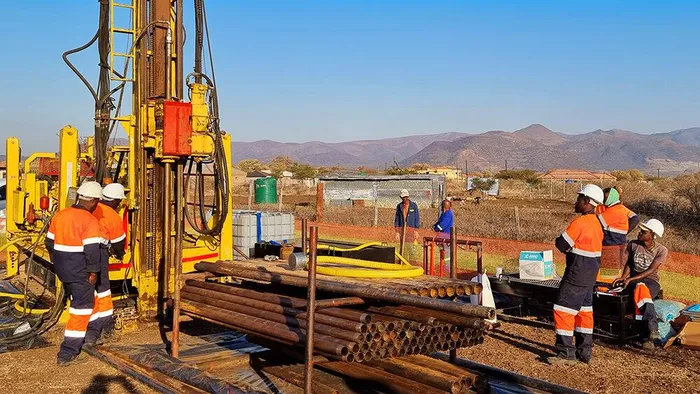
Located on the Eastern Limb of the Bushveld Complex, the Bengwenyama project is regarded as one of the world’s largest undeveloped PGM resources. Southern Palladium is currently advancing Definitive Feasibility Study (DFS) workstreams alongside early-stage mine development planning.
Image: Supplied
A major metallurgical breakthrough at Southern Palladium’s Bengwenyama project in Limpopo has significantly enhanced the project’s revenue potential, with chrome now expected to emerge as a key contributor alongside platinum group metals (PGMs).
The company on Friday announced that recent metallurgical test work indicates that as much as 20% of future revenues from the Bengwenyama PGM project could be derived from chrome, marking a substantial shift from earlier projections where chrome was considered a secondary by-product.
The breakthrough comes at a time when mining companies are under increasing pressure to maximise resource value and improve operational efficiency. By elevating chrome to a co-product rather than a by-product, Bengwenyama’s revised outlook could position it as a more resilient and diversified mining operation.
Located on the Eastern Limb of the Bushveld Complex, the Bengwenyama project is regarded as one of the world’s largest undeveloped PGM resources. Southern Palladium is currently advancing Definitive Feasibility Study (DFS) workstreams alongside early-stage mine development planning.
In a statement released on both the Australian Securities Exchange and the JSE, the company confirmed that the latest test work not only validated the high-grade nature of the UG2 mineral resource but also revealed significantly improved chrome recovery rates.
Southern Palladium’s CEO, Johan Odendaal, described the findings as potentially transformative for the project.
“Metallurgical test work has once again confirmed the grade and robust nature of the UG2 Mineral Resource, but the doubling of chrome recoveries is potentially company-changing; it elevates chrome from a by-product to a parallel output,” Odendaal said.
According to the results, recoveries of chrome reached 65%—more than double the 30% recovery rate assumed in the project’s Optimised Pre-Feasibility Study (OPFS) released in July 2025. This improvement has a direct and material impact on projected revenues, with chrome previously estimated to contribute around 12%.
The metallurgical sample also confirmed strong PGM grades. On a 3E basis—covering platinum, palladium and gold—the resource delivered an average grade of 7.35 grams per tonne. The prill split shows a near-even distribution between platinum (49.9%) and palladium (48.6%), with gold accounting for 1.5%. In addition, the chromite component recorded a Cr₂O₃ grade of 29.71%.
These results suggest that the sample is representative of the first decade of planned production and could yield approximately 350,000 tonnes of high-grade chrome concentrate over that period.
A key factor behind the improved performance is the introduction of dense media separation (DMS) into the processing circuit—an approach not included in the earlier OPFS design.
The company said test work involving composite samples, including footwall material, demonstrated that DMS can effectively remove waste rock before milling and flotation.
Odendaal noted that DMS is a well-established beneficiation method in UG2 processing, offering several operational advantages. By eliminating barren material early in the process, DMS reduces the volume of ore requiring further processing, thereby improving overall efficiency.
“The key benefits of this approach are a substantial reduction in the milling and flotation circuit load, together with a marked increase in both PGM and chromite head grades to the concentrator,” he said.
The improved chrome yield and waste rejection process are expected to reduce the size and cost of the downstream processing plant. A smaller PGM milling and flotation circuit would lower upfront capital expenditure and potentially accelerate the project’s development timeline.
In addition, the enhanced processing efficiency could reduce the risk of penalties associated with PGM concentrate quality, further strengthening the project’s economic profile.
Southern Palladium said the latest findings are now being incorporated into the final stages of the DFS, where plant design and performance metrics are being refined.
As the DFS progresses, investors and industry stakeholders will be watching closely to see how these improved recoveries translate into final project economics and development timelines.
BUSINESS REPORT