

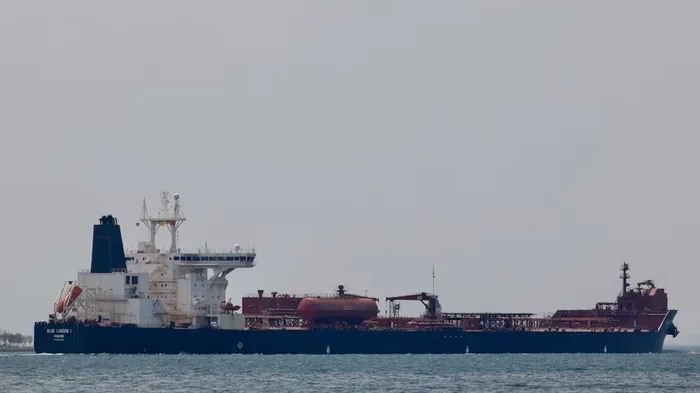
The current disruption in global oil flows, following the conflict involving Iran, has quickly translated into higher fuel costs, rising transport pricing and renewed pressure on supply chains across Africa, says the writer.
Image: File
By Mark Truscott
The current disruption in global oil flows, following the conflict involving Iran, has quickly translated into higher fuel costs, rising transport pricing and renewed pressure on supply chains across Africa. For many businesses, the impact is already visible in margins, delivery timelines and pricing decisions.
What this moment highlights is not only exposure to global events, but also how supply chains across the continent are structured.
AfCFTA has been widely discussed as a trade agreement. In practice, it is beginning to shape how goods move, where distribution happens and how businesses position themselves operationally.
In our experience, industrial demand is not spreading evenly. It is concentrating in specific locations where infrastructure supports movement at scale. In Southern Africa, corridors such as the N3 between Durban and Johannesburg, the Maputo Corridor and the N1 northbound route are increasingly functioning as the backbone of regional distribution networks.
These corridors are more than transport routes. They are forming the structure around which supply chains are organised. Around them sit inland logistics hubs, distribution centres and cross-border nodes that allow goods to move efficiently between markets.
As trade volumes increase, distribution is shifting further inland. Ports remain critical entry points, but the real work of supply chains happens in inland hubs where goods are consolidated, broken down, and redirected. This allows businesses to respond more effectively to demand across multiple markets.
Infrastructure is becoming central to this shift. Power availability, transport access, customs integration and the ability to scale operations are increasingly determining where supply chains perform best. These are practical considerations that directly affect throughput, reliability and cost.
There is also a growing focus on flexibility. As volumes increase across regional trade routes, businesses are placing greater value on locations that allow goods to move through multiple pathways rather than relying on a single route. Inland hubs and corridor-aligned facilities support this by enabling redistribution across different markets without requiring structural changes to the supply chain.
In practical terms, this is already influencing how businesses think about their operating models. Distribution networks are being positioned to serve multiple markets from fewer, better-connected locations. Throughput and reliability are being prioritised alongside cost. Production decisions are increasingly linked to how efficiently goods can move both into and out of a facility.
The effect is cumulative. As supply chains become more integrated across the region, performance is determined less by proximity to a single market and more by position within a broader network. Locations that combine connectivity, infrastructure and operational flexibility are becoming central to how goods move across sub-Saharan Africa.
The direction is clear.
AfCFTA is shaping a more connected and infrastructure-led supply chain environment across South Africa and the rest of the continent. As this develops, the role of logistics nodes, corridors and inland hubs will continue to strengthen.
The key takeaway is practical. Location decisions are no longer separate from supply chain strategy, but at the nucleus. The question is not only where operations are based: It is how effectively those locations support the movement of goods across a growing and increasingly connected market.

Mark Truscott is the head of leasing and marketing for developments at Improvon.
Image: Supplied
* Mark Truscott is the head of leasing and marketing for developments at Improvon.
** The views expressed do not necessarily reflect the views of IOL or Independent Media.
BUSINESS REPORT