

As the country continues to explore diverse energy options, SMRs could play a pivotal role in balancing reliability, sustainability and industrial development in the years ahead.
Image: File
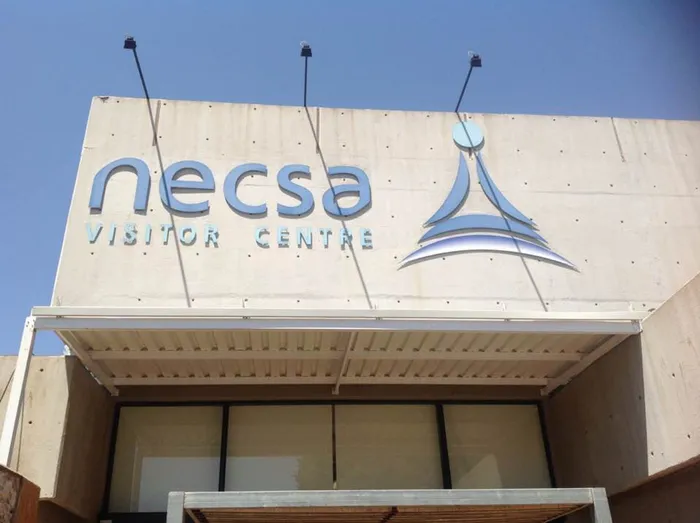
The South African Nuclear Energy Corporation (Necsa) has launched a process to identify international and local partners for the development of small modular reactor (SMR) technology, marking a significant step in South Africa’s efforts to expand its nuclear energy capabilities.
As the country continues to explore diverse energy options, SMRs could play a pivotal role in balancing reliability, sustainability and industrial development in the years ahead.
In a statement, Necsa announced the opening of an Expression of Interest (EOI) process aimed at attracting qualified organisations, consortia and technology providers to collaborate on the design, development and eventual deployment of SMRs in the country.
The initiative aligns with the country’s Integrated Resource Plan (IRP 2025), which outlines the role of nuclear energy in South Africa’s future energy mix. SMRs, which are smaller and more flexible than traditional nuclear reactors, are increasingly viewed as a viable solution for reliable, low-carbon power generation.
Necsa group CEO Loyiso Tyabashe said the EOI process is designed to gather detailed insights into available SMR technologies and assess their readiness for deployment.
“Through the EOI process, Necsa seeks togather detailed information on available SMR technologies, their maturity, licensing experience, and deployment readiness. Our aim is to demonstrate an SMR technology that will produce power, process heat and isotopes,” Tyabashe said.
“This gives Necsa an opportunity to assess existing capabilities and financing models to fulfil its strategic objectives of positioning South Africa at the forefront of advanced nuclear technologies.”
He added that the programme forms part of a broader strategy to integrate South Africa into the global SMR supply chain while strengthening domestic industrial capacity. A key focus will be on localisation, including the development of local skills and the transfer of intellectual property.
Necsa chairperson David Nicholls emphasised that the EOI represents only the first phase of a structured selection process. He noted that potential partners will be assessed based on several criteria, including alignment with national nuclear policy, technological maturity, financial strength and commitment to local development.
“It prequalifies respondents based on alignment with South Africa’s nuclear policy and experience base, technology readiness for timely deployment, financial strength for long-term delivery, commitment to intellectual property transfer and localisation of skills and technology, and the diversity of applications to maximise socio-economic and industrial benefits,” he said.
Following the EOI phase, Necsa plans to issue a formal Request for Proposals (RFP), which will move the process into a more advanced stage of project development. Any eventual deployment of SMR technology will be subject to South Africa’s regulatory requirements, including environmental impact assessments and public participation processes.
The corporation indicated that the envisioned SMR programme could serve multiple purposes beyond electricity generation. These include providing process heat for industrial applications and producing medical isotopes, which are already a key component of South Africa’s nuclear sector.
Industry analysts have noted that SMRs are gaining global traction due to their modular design, lower upfront capital costs and potential for faster deployment compared to large-scale nuclear plants. For South Africa, which faces ongoing energy constraints, the technology could offer a flexible and scalable solution to support energy security and economic growth.
Necsa’s move signals a renewed push to revitalise the country’s nuclear ambitions while ensuring alignment with global technological advancements. By seeking partnerships with experienced players, the organisation aims to reduce risks associated with large infrastructure projects and accelerate the path to implementation.
The success of the initiative will depend on attracting credible partners and securing the necessary regulatory approvals and funding. However, the launch of the EOI process marks an important milestone in South Africa’s pursuit of next-generation nuclear energy solutions.
BUSINESS REPORT