

Despite concerns, Raphi Maake, the director for fuel pricing mechanism at the DMPR, stressed that South Africa is not drawing down its strategic reserves at this stage, citing adequate availability of oil and refined products in international markets.
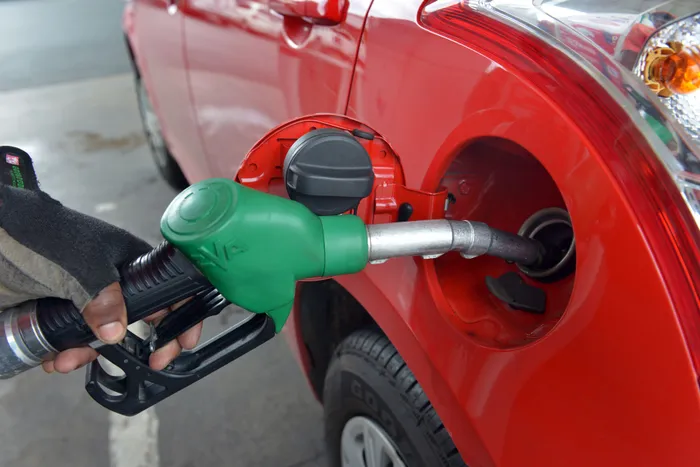
Image: Picture: Karen Sandison/Independent Newspapers
South Africa’s strategic fuel reserves have come into sharp focus as officials confirmed the country is holding significantly lower volumes of crude oil stock than its total storage capacity, even as global energy markets remain volatile due to geopolitical tensions.
During a media briefing on fuel pricing and supply dynamics on Wednesday, the Department of Mineral and Petroleum Resources (DMPR) revealed that the country currently holds about 8 million barrels of strategic crude oil.
This is well below the capacity of the Strategic Fuel Fund storage facilities, including the Saldanha Bay terminal, which has a 45-million-barrel capacity and the developing Oiltanking MOGS Saldanha (OTMS) terminal, which can store up to 13.2 million barrels.
"The number that we got from the Strategic Fuel Fund is that we have 8 million barrels of strategic crude stock that is there," said Raphi Maake, the director for fuel pricing mechanism at the DMPR.
The disclosure comes amid heightened global uncertainty linked to conflict in the Middle East, a region critical to global oil supply, which has seen the chokepoint Strait of Hormuz effectively closed for crude oil shipping vessels.
Despite concerns, Maake stressed that South Africa is not drawing down its strategic reserves at this stage, citing adequate availability of oil and refined products in international markets.
"But, as we are saying at the moment, we are not even touching on that strategic stock because there's a lot of fuel that is available in the international market, outside the Middle East, that is coming to the country," Maake said.
The reassurance forms part of broader efforts by government and industry to calm fears of potential fuel shortages, as rising prices and geopolitical risks have triggered increased public concern.
The Fuels Industry Association of South Africa and the DMPR emphasised that South Africa’s fuel supply remains stable, with daily monitoring of shipments and imports ensuring continuity. The country consumes between 60 and 70 million litres of petrol and diesel every day, a demand that is currently being met through a diversified import strategy.
While the Middle East remains a major supplier, South Africa has increasingly sourced crude oil from African producers such as Nigeria, Ghana and Angola, as well as newer suppliers like Brazil. Maake said this diversification has helped cushion the impact of disruptions in traditional supply routes.
However, the low level of strategic reserves raises questions about the country’s preparedness in the event of a severe supply shock, such as a prolonged closure of key shipping routes or a major escalation in global conflict. By law, there are supposed to be two months' supply of transport fuel held in reserve at any one time.
Strategic reserves are typically intended as a buffer during emergencies, allowing countries to stabilise supply and prices when normal supply chains are disrupted. With only a fraction of storage capacity currently filled, South Africa may have limited room to manoeuvre if global conditions worsen.
At the same time, Maake reiterated that current market conditions do not justify tapping into these reserves, as doing so prematurely could undermine long-term energy security.
Beyond reserves, Maake also highlighted how global oil price volatility is feeding into local fuel costs. The Basic Fuel Price (BFP), which reflects import parity pricing, remains a key driver of pump prices, alongside domestic levies and taxes.
Maake explained that under-recoveries, where fuel retailers pay more for fuel than the regulated pump price, are passed on to consumers in subsequent price adjustments. This mechanism, combined with rising global prices, is expected to contribute to further increases in fuel costs in the coming months.
BUSINESS REPORT