

Agricultural Business Chamber of South Africa (Agbiz) said that they remain hopeful that food inflation won't rise sharply in 2026 despite the challenges of Foot and Mouth Disease and other animal disease concerns.
Image: File
Agricultural Business Chamber of South Africa (Agbiz) said that they remain hopeful that food inflation won't rise sharply in 2026 despite the challenges of Foot and Mouth Disease and other animal disease concerns.
Wandile Sihlobo, the chief economist at Agbiz, said South Africa continued to struggle with foot-and-mouth disease in the cattle industry and African swine fever in the pig industry.
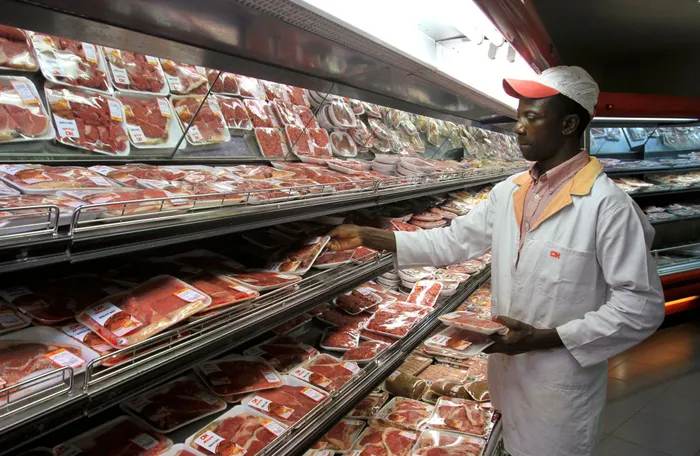
“Concerns about the path of consumer food price inflation in 2026 are naturally and correctly on many people’s minds. We remain optimistic that meat prices may not surge as sharply as some fear, which would be welcome news for households. The slaughter rates in the cattle and pig industries remain reasonably robust, although farmers are under financial strain due to the spread of diseases,” he said.
Sihlobo said that data from the South African Pork Producers’ Organisation (SAPPO) show that South Africa’s pig slaughter reached 331,453 in December 2025, 11% higher than in November 2025 and 2.9% higher than in December 2024.
“Annual cumulative slaughter figures reached 3,849,684 during December 2025, 0.4% lower compared to the same period of the previous year. The cattle slaughter figures also show a mild reduction in 2025, when FMD disease began to intensify, with cattle slaughter down by roughly 5% from 2024,” he said.
Sihlobo added that this is an important context to keep in mind because it shows that meat supplies are not constrained.
“The activity for the year depends on our current efforts to contain the spread of these diseases and on vaccination efforts against FMD. That said, we observed a surge in meat prices last year, but this was primarily due to panic buying driven by retailers’ announcements rather than a product shortage. Buoyant consumer demand was the main driver of meat prices. This remains a reality, to an extent,” he said.
Sihlobo said that another fact worth keeping in mind is that during FMD outbreaks, the country is typically temporarily closed to some export markets, leading to some slight increase in domestic meat supplies and lower consumer prices. In 2025, we saw the opposite because of the factors above. Another issue in 2025 was the higher prices for poultry.
“This was due to a temporary ban on poultry imports from Brazil following an avian influenza outbreak there. South Africa still imports approximately 20% of its annual poultry consumption, and Brazil is one of the largest suppliers. Therefore, this caused some panic. However, imports resumed soon after Brazil brought the spread of avian influenza under control,” he said.
Sihlobo added that the risks remain in meat prices, but we continue to believe that a lot hinges on the current vaccination efforts underway against foot-and-mouth disease. “We also believe we could see decent slaughter levels in the coming months, although I must emphasise again that cattle and pig farmers are under immense financial pressure. The limits on animal movement, a key measure to control the spread of the disease, pose risks to the availability of animals on farms. Still, this is a necessary measure.”
Sihlobo added that in the broader context of consumer food price inflation, Agbiz expects South Africa’s consumer food price inflation to moderate in 2026.
“Lower grain, fruit, and vegetable prices on the back of ample domestic and global supplies, and moderating vegetable oil prices, are among the factors that will underpin the softening of price inflation. South Africa had an abundant harvest, with the 2024-25 summer grains and oilseed harvest estimated at 20.08 million tonnes (up 30% y/y). The new season also looks encouraging. We have been receiving favourable rainfall since the start of the season,” he said.
Sihlobo said that South Africa’s 2025-26 summer grains and oilseeds production is forecast at 19.82 million tonnes.
“While this is 3% less than the 2024-25 season, it remains an encouraging estimate. Regarding vegetables and fruits, we observed severe flooding in parts of Limpopo and Mpumalanga over the past few weeks. But these fortunately came after the completion of the potato season. Thus, there appears to be no significant vegetable damage. The primary concern remains in the citrus regions, particularly the quality of the upcoming season, given the flooding observed in the fields,” he said.
Sihlobo added that in essence, Agbiz expects South Africa’s consumer food price inflation to slow in 2026.
“I must state that the consumer food price inflation was 4.4% in January 2026, unchanged from December 2025. These were likely the higher levels, as we may see some softening going forward. To close, an important clarification is worth emphasising: lower food inflation does not necessarily translate into lower prices. Inflation is the rate of price increases. Therefore, while that pace may moderate, some food item prices will continue to rise moderately. Certainly, 2026 remains a tricky period, but there are sufficient positive factors to convince us that South Africa's food price inflation path may soften in 2026,” he said.
BUSINESS REPORT